
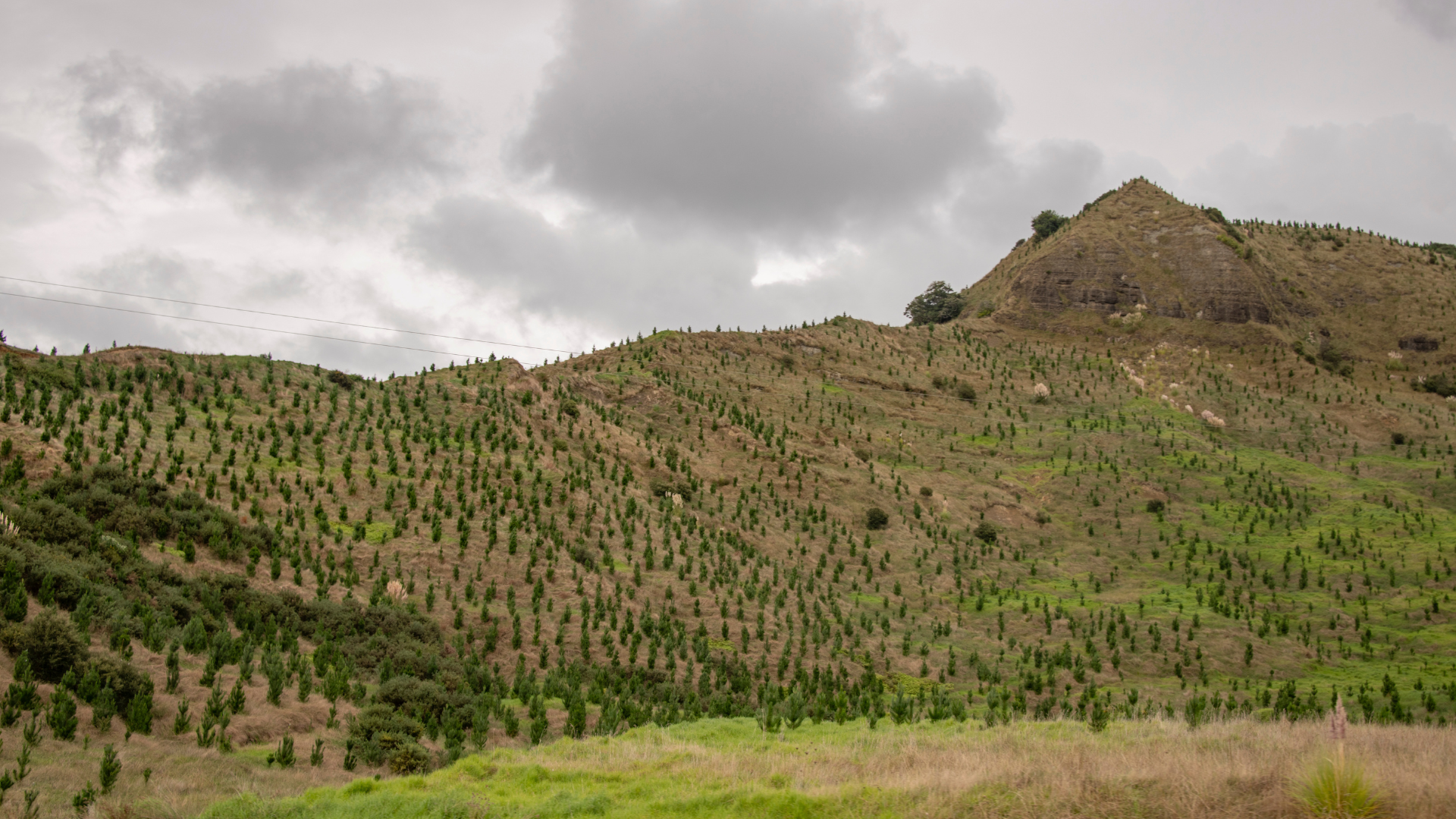
New limits on farmland to forestry conversions
The amount of farmland being converted to exotic forestry and registered in the Emissions Trading Scheme (ETS) has been limited with the introduction of the Climate Change Response (Emissions Trading Scheme-Forestry Conversions) Amendment Act 2025. The legislation came into force on 31 October 2025.
‘Farmland’ is classified according to the Land Use Capability (LUC) scale. Classification is based on the farmland’s long-term ability to support various productive uses. Features such as climate, soil, slope, vegetation and erodibility are taken into consideration. The classes include:
- Classes 1 to 4 – arable land for a range of cultivations
- Classes 5 to 7 – non-arable land suitable for pastoral farming and forestry, and
- Class 8 – severe restrictions around land use.
Since 31 October, there are new limits on how much exotic forest can be registered on the ETS. The restrictions impact post-1989 forest land classified within LUC classes 1 to 6 that was not already forestry land on 31 October 2025, where the forest species on the land are mostly exotic. If one of the following exceptions apply, however, the land can still enter the ETS:
- Indigenous forest land
- Exempt as Māori land
- High or severe erosion prone land in a regional or district plan
- Crown afforestation land
- Unmapped and not on the national LUC scale map
- Unfarmed land, or
- Classed as 7 or 8 on the LUC scale.
You can check your land’s classification on the national LUC map or have your own LUC assessment completed.
If land is restricted from conversion to forestry under the Act you may still register up to 25% of restricted land on an individual farm in the ETS scheme. There is also a biannual national ballot for land classed as 6 on the LUC scale to allow a further 15,000 hectares annually to enter the ETS scheme. The 25% allowance is of your total land within the farm boundary including any non-restricted land.
The new legislation aims to protect the future of New Zealand food production, while still allowing sustainable growth in the forestry sector. It also protects farmers’ ability to diversify their farmland.
Increase in Disputes Tribunal jurisdiction
From 24 January 2026, the Disputes Tribunal’s financial jurisdiction will increase from $30,000 to $60,000. These changes will improve New Zealanders’ access to cost-effective justice.
Filing fee increase: The Tribunal’s filing fees will also increase as they are set in tiers according to the amount in dispute. The filing fee for claims of $30,001 or more will be $468.
The tiered filing fee system reflects the amount of time taken to hear the dispute with larger claims assumed to take longer and have greater impact on the parties. While the new tier is higher than the current cost to file a claim in the District Court, the Tribunal does not charge additional hearing fees so access to justice is still improved.
Tribunal process: The Disputes Tribunal provides timely, low-cost, and accessible resolutions for many civil or contractual disputes. Hearings are run by a referee in an informal setting, unlike the formal court process. Lawyers are not permitted.
The Tribunal does not deal with undisputed debts, disputed debt valued over $60,000, employment issues, tenancy issues, social benefit disputes, wills or estate disputes, land disputes, intellectual property or family law. For these disputes there are other means of seeking justice such as the District or Family Court and so on.
Good for resolving contractual disputes: For farmers, this expansion provides a more accessible avenue for resolving contractual disputes. It offers a cheaper, faster alternative to the court system and avoids the common issue where civil claims between $30,000 and $60,000 are uneconomic to pursue. Previously, claims were partly abandoned to limit a claim to $30,000 and stay within the financial jurisdiction of the Disputes Tribunal. The ability to abandon part of a claim will still be available to bring larger claims down to $60,000 but, as before, one large claim cannot be broken up into multiple smaller claims.
Time limits: It is still important to be mindful of any applicable time limits involved in a claim. For example, some contract milking agreements require specific notice of disputes to be raised within 28 days of either becoming aware of the issue or the end of the season, whichever occurs earlier. While those clauses may not apply to claims before the Disputes Tribunal, it would be wise to ensure they are met to avoid any argument, especially if the Tribunal’s jurisdiction will be exceeded.
Although we cannot appear at the Disputes Tribunal, if you would like some advice on a potential claim or defence we are happy to help.
Health and safety considerations for farm visits
With the growing popularity of farm visits and stays, it is important to understand the health and safety implications that come with hosting visitors on your farm.
Farm hosts must take all reasonably practicable steps to eliminate or minimise risks, considering the likelihood and severity of harm, what visitors can reasonably be expected to know, and the availability, suitability, and cost of the ways to eliminate or minimise those risks. All this comes under the Health and Safety at Work Act 2015.
Whether your farm guests are staying overnight or just visiting an operating farm or workplace, it is important to consider if they will be in a vicinity of animals, heavy machinery or hazardous substances. Procedures need to be in place to mitigate the risk of damage or harm to your visitors, other workers and animals. The legislation states that this responsibility falls to the person in charge of the business or undertaking (PCBU).
It is good practice to provide all your farm guests with health and safety information, and requirements before they arrive or, at the latest, on their arrival. Where possible, your guests should sign a written confirmation that they have been provided with the information and requirements. Warnings and prohibited areas should also be clearly displayed onsite, so it is clear to all visitors the immediate dangers present.
The PCBU must warn authorised visitors of any work-related, or out of the ordinary, hazards that may cause them serious harm. For many people who are visiting a farm the usual hazards that farmers would always avoid may not be immediately obvious. Examples of these are chemicals such as herbicides and pesticides, animals, machinery, and water hazards such as oxidation ponds and troughs.
This duty applies only to authorised visitors who have the farmer’s or owner’s permission to be on the farm. A PCBU will not be liable under the Act for harm suffered by people who enter your property without permission.
Visitors also have responsibilities. They must take reasonable care to ensure their actions, or lack of, don’t put themselves or others at risk. They must also comply with any reasonable instructions given by the PCBU, as far as practicable.
If you are establishing a farm stay or walk over the summer, we’re happy to help you set this up.
DISCLAIMER: All the information published in Rural eSpeaking is true and accurate to the best of the authors’ knowledge. It should not be a substitute for legal advice. No liability is assumed by the authors or publisher for losses suffered by any person or organisation relying directly or indirectly on this newsletter. Views expressed are the views of the authors individually and do not necessarily reflect the view of this firm. Articles appearing in Rural eSpeaking may be reproduced with prior approval from the editor and credit being given to the source. Copyright © NZ LAW Limited, 2025. Editor: Adrienne Olsen. E: adrienne@adroite.co.nz. M: 029 286 3650